

Social trends don’t come with production manuals. They appear first as visual noise—shared desks on Instagram, minimalist workspaces on Pinterest, and lifestyle videos that make furniture look effortless and universal. But behind every trend-driven product that actually succeeds at scale, there is a manufacturing strategy quietly doing the heavy lifting.
For global furniture brands, the real challenge isn’t spotting trends early. It’s turning those trends into manufacturable, repeatable, and cost-controlled furniture collections that factories can produce consistently and buyers can reorder with confidence.
So how does that translation really happen?
1. Social Trends Are Interpreted Through Manufacturing Feasibility First
Experienced furniture brands don’t treat social trends as final design instructions; instead, they view them as directional input that must pass through manufacturing reality. Before sketches become samples, design teams already consider production complexity, tooling requirements, and whether the concept fits existing factory capabilities without excessive customization.
This early alignment ensures that trend-inspired furniture designs are not only visually relevant but also compatible with standardized production processes, reducing the risk of delays, quality inconsistency, or cost overruns later in mass production.
2. Buyer Demand and Factory Feedback Shape the Same Conversation
Scalable furniture products sit at the intersection of market demand and factory execution, not at either extreme. Brands validate trends by combining distributor feedback, B2B buyer inquiries, and manufacturer input, allowing them to adjust designs before committing to molds, materials, or packaging systems.
This collaborative loop prevents brands from launching products that look appealing online but fail to meet commercial expectations once lead times, MOQ requirements, and shipping constraints come into play.
3. Modular Design Is the Core of Trend Scalability
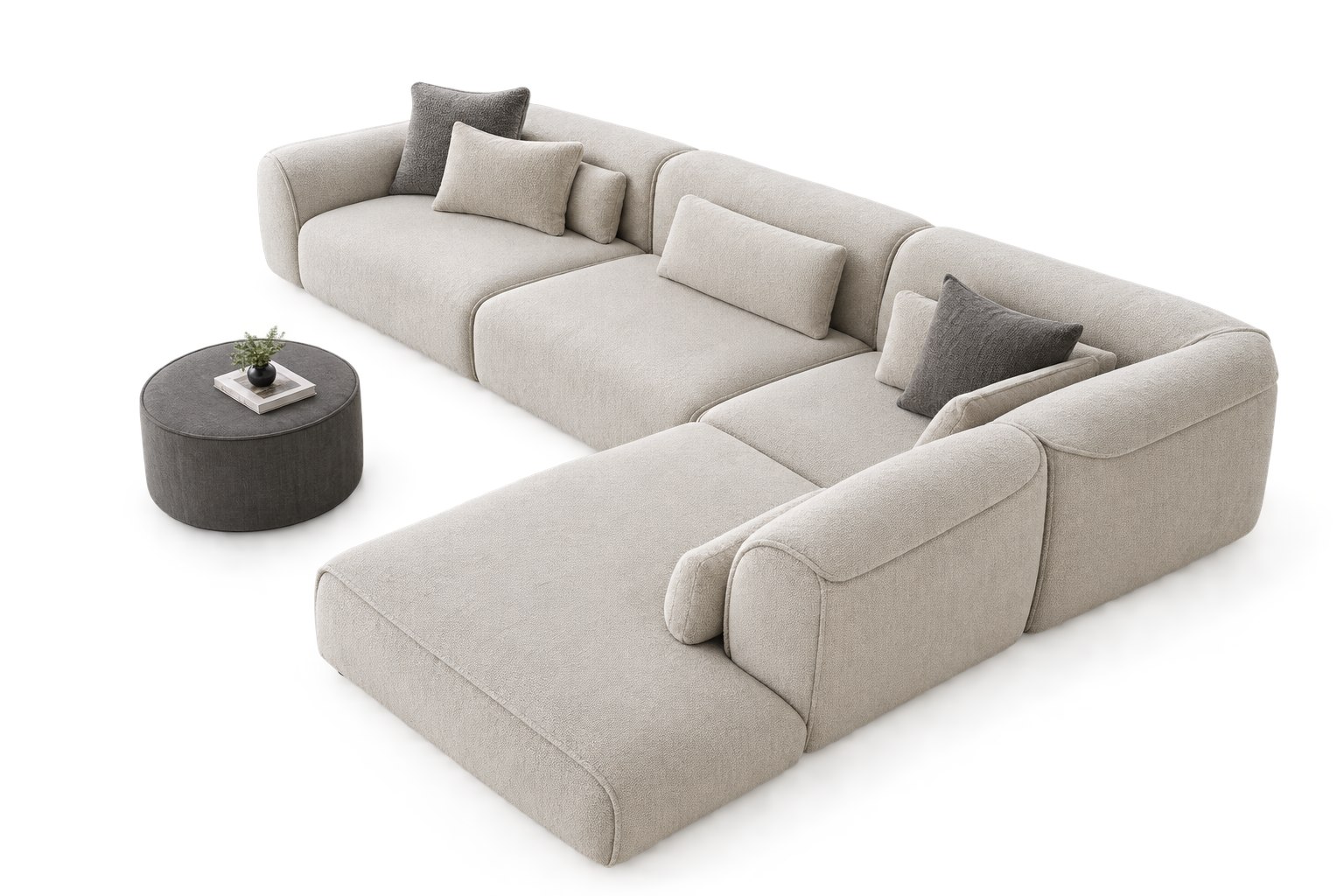
When trends move fast, modular furniture design becomes the most reliable way to scale without chaos. By building products around standardized frames, interchangeable components, and flexible surface finishes, factories can produce multiple SKUs from one structural system while maintaining production efficiency.
From a manufacturing perspective, modularity reduces tooling investment and shortens production cycles, while brands gain the ability to localize products for different markets without redesigning from scratch.
4. Material Choices Are Optimized for Supply Chain Stability
Trending aesthetics often introduce new textures or finishes, but scalable furniture manufacturing depends on materials with predictable supply, stable pricing, and proven performance in bulk production. Brands that succeed globally balance visual appeal with materials that factories can source reliably and process consistently over time.
This approach minimizes supply chain volatility and ensures that popular products remain available beyond their initial launch window, supporting long-term reorders rather than one-off trend sales.
5. Factory Partnerships Enable Customization Without Breaking Efficiency
Customization does not automatically mean inefficiency—when supported by the right manufacturing systems. Furniture factories with OEM and ODM experience help brands introduce controlled customization through size options, finish variations, or functional add-ons, all while keeping core production lines intact.
Long-term factory partnerships allow continuous optimization, enabling trend-driven collections to evolve gradually instead of being rebuilt every season, which is critical for maintaining margins and production reliability.
6. Scalable Brands Think in Systems, Not Seasonal Hits
The most successful global furniture brands don’t chase every trend individually. They invest in repeatable development systems, stable factory relationships, and standardized production frameworks that can absorb new trends without operational disruption.
When systems are in place, social trends become manageable inputs rather than risks, and factories become strategic partners rather than reactive suppliers.
Final Insight
Social media may spark inspiration, but scalable furniture products are built through manufacturing discipline. Brands that align trend interpretation with modular design, material stability, and factory-driven execution turn fleeting visuals into long-term product lines that buyers trust and factories can sustain.
That’s where trends stop being noise—and start becoming growth.