



Are you tired of standard mass-market furniture options?
Global B2B demand for unique, high-quality pieces is rising.
Moving from initial concept to final delivery is often complex.
In this post, you will learn to streamline your sourcing.
Master materials, prototypes, MOQs, and achieve factory-direct cost-efficiency.
Understanding the Basics of Custom Furniture Manufacturing
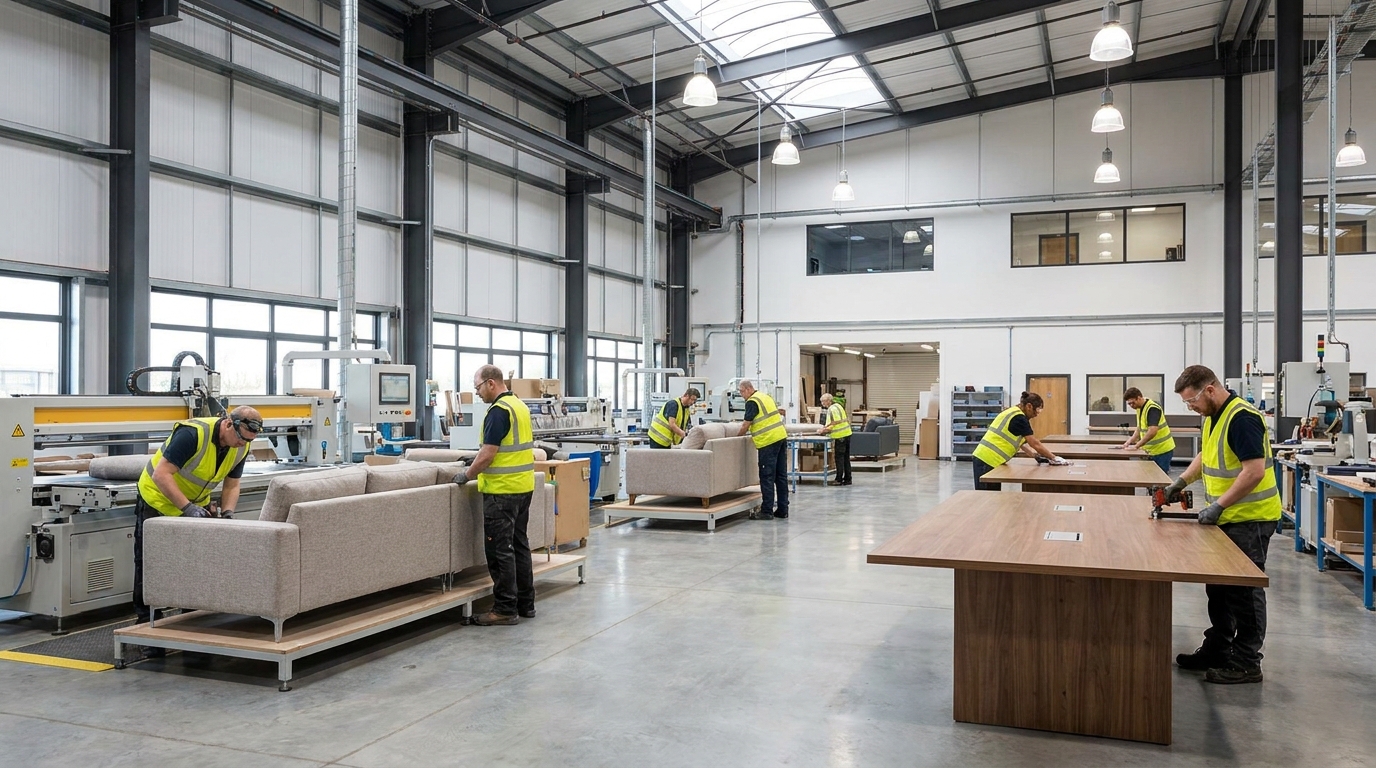
Moving from a simple sketch to a finished piece starts by understanding the landscape. Custom furniture manufacturing goes beyond picking a fabric color. It involves engineering a product specifically for your brand. Global buyers now demand unique pieces to stand out. This process gives you total control over dimensions, finishes, and structural integrity.
Production Types Explained
Navigating the factory floor requires knowing your manufacturing terms. Different projects demand different production models. You must align your volume needs to the right facility.
| Production Type | Definition | Typical Volume | Best Fit |
|---|---|---|---|
| Bespoke | Fully unique, hand-crafted pieces built from scratch. | 1–5 units | High-end residential, luxury boutiques. |
| Made-to-Order | Pre-designed frames utilizing COM (Customer’s Own Material). | 20–50 units | Boutique hotels, small retail shops. |
| Mass OEM furniture production | Factory builds your proprietary design at scale. | 100+ units or full 20ft containers | Large retail chains, major commercial projects. |
Industry-Specific Customization Benefits
Why invest time in custom builds? Different industries face unique daily challenges. Off-the-shelf products often fail under commercial stress.
- Commercial and Hospitality: You need extreme durability for public spaces. Hotels often require contract-grade fabrics hitting 50,000 to 100,000 cycles. Custom builds let you specify high-resiliency foam. You can ensure foam density hits 1.8 to 2.5 lbs per cubic foot.
- Retail Brands: Selling wholesale custom furniture helps you escape price wars. You build strong brand loyalty by offering exclusive designs. Generic catalog items cannot provide this competitive edge.
The “Industrial Cluster + Digital Operation” Advantage
Sourcing directly from overseas factories used to feel risky. Communication gaps often ruined great designs. Today, an innovative digital operation model changes everything. Homefurnitureliving serves as your digital bridge to China’s premium furniture industry.
We unite top-tier manufacturing lines to offer unparalleled flexibility. You get factory-direct cost-efficiency avoiding traditional sourcing headaches. Our team conducts strict on-site inspections and rigorous capacity evaluations. We manage comprehensive quality control on the factory floor. Our integrated logistics handle cross-border customs clearance seamlessly. This end-to-end B2B sourcing experience ensures your exact specifications arrive safely.
Sourcing Furniture Factory Materials for Your Project
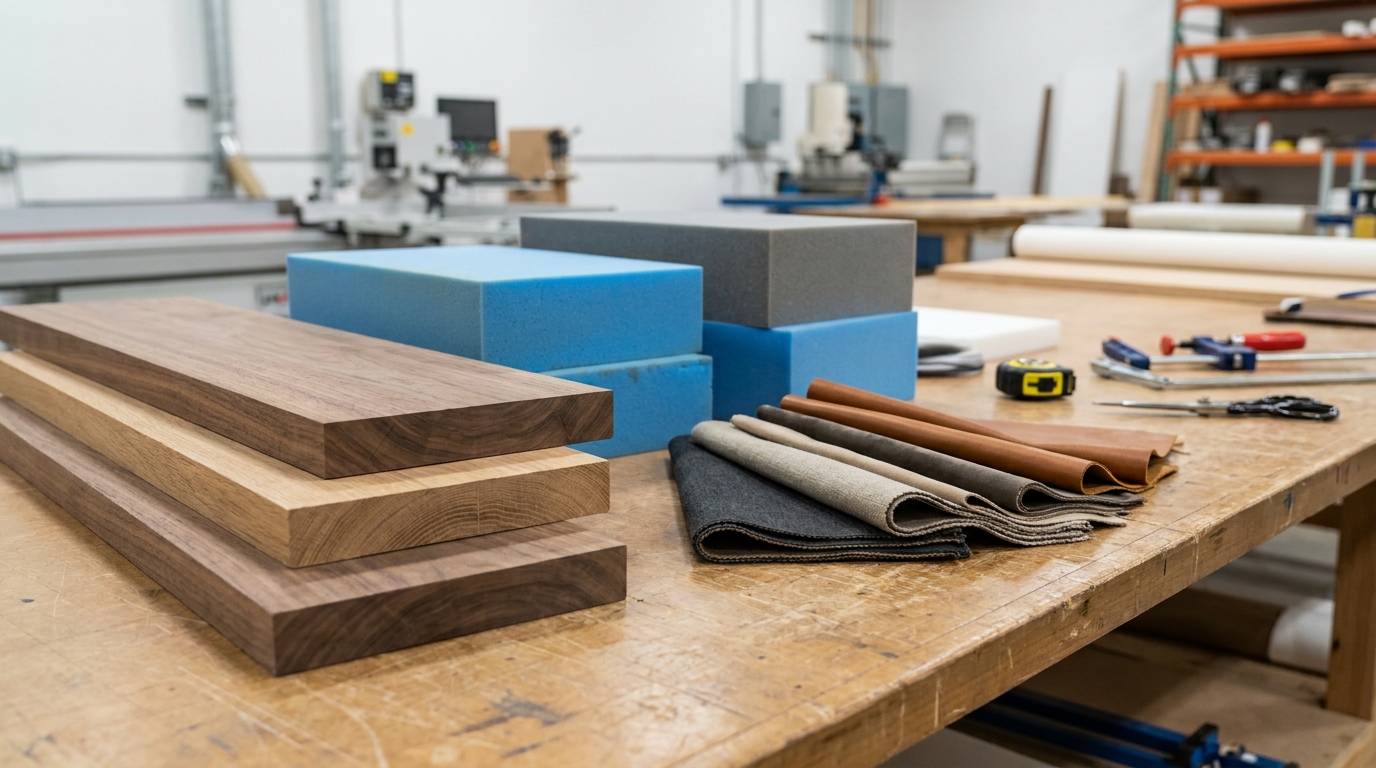
We just explored how an integrated digital operation model secures factory-direct cost-efficiency. Now, we must look at what actually goes into your products. Selecting the right furniture factory materials dictates everything. It determines structural durability and defines visual appeal. It ultimately drives your market success. Poor material choices will ruin even the best engineering. High-end retail buyers expect flawless execution. They will notice warping wood or cheap fabrics immediately. In this section, you will discover how to select premium inputs. We will cover solid woods, engineered boards, commercial metals, and sustainable options. You will learn how top manufacturers evaluate raw inputs. We will also show you how to balance premium quality against strict production budgets.
Core Materials for Premium Production
You need a clear understanding of material capabilities before approving shop drawings. Different furniture components require different physical properties to function properly.
Solid wood provides incredible strength. Use it for structural legs and exposed edges. However, solid wood expands and contracts based on ambient humidity. Kiln-dried lumber must maintain a strict moisture content of 6% to 8%. This precise level prevents warping or cracking indoors. For large flat surfaces like tabletops, engineered woods excel. High-quality MDF or plywood covered in real wood veneer remains perfectly stable. It prevents seasonal movement entirely.
Metals and upholstery also demand careful selection. Steel offers heavy-duty support for commercial seating frames. Aluminum provides a lightweight, rust-proof alternative for outdoor collections. As we covered earlier, commercial spaces demand extreme durability. You must pair high-resiliency foam alongside heavy-duty fabrics to survive daily abuse.
How Top Manufacturers Evaluate Raw Inputs
Sourcing materials directly impacts your final product quality. Homefurnitureliving leverages our industrial cluster model to access premium raw materials efficiently. We never just trust supplier claims blindly. Our team conducts strict on-site inspections at the component level.
Before full assembly begins, rigorous capacity evaluations take place. We verify wood moisture levels using specialized meters. We check metal gauge thickness for structural safety. We test fabric colorfastness to ensure long-term vibrancy. Always request a finish sample or strike-off on the exact wood species. This step ensures the final stain matches your vision perfectly. Catching material flaws early prevents expensive delays during the furniture prototyping phase.
Balancing Quality, Budget, and Sustainability
You want premium quality. You also need to protect your profit margins. Smart material selection makes this delicate balance possible. You do not need solid oak for hidden internal frames. High-grade plywood works perfectly and costs significantly less. This strategy lowers your overall spend without sacrificing durability.
Sustainability now drives major consumer purchasing decisions globally. You can easily integrate eco-friendly options into your custom builds. Specify FSC-certified lumber to guarantee responsible forestry practices. Request low-VOC or zero-VOC finishes for your products. These specific finishes meet strict LEED certification standards. They also appeal strongly to health-conscious residential markets.
Let us compare common material strategies to help you decide.
| Furniture Component | Traditional Premium Material | Smart Engineered Alternative | Primary Benefit of Alternative |
|---|---|---|---|
| Large Flat Surfaces (Desks, Tables) | Solid Hardwood | MDF Veneer (Plain Sliced) | Prevents seasonal warping and reduces material costs. |
| Internal Seating Frames | Solid Oak or Maple | Kiln-Dried Plywood | Maintains high structural integrity at a lower price. |
| Decorative Metal Accents | Solid Brass | Brass-Plated Steel | Delivers a heavy luxury aesthetic under strict budgets. |
The Crucial Step of Furniture Prototyping
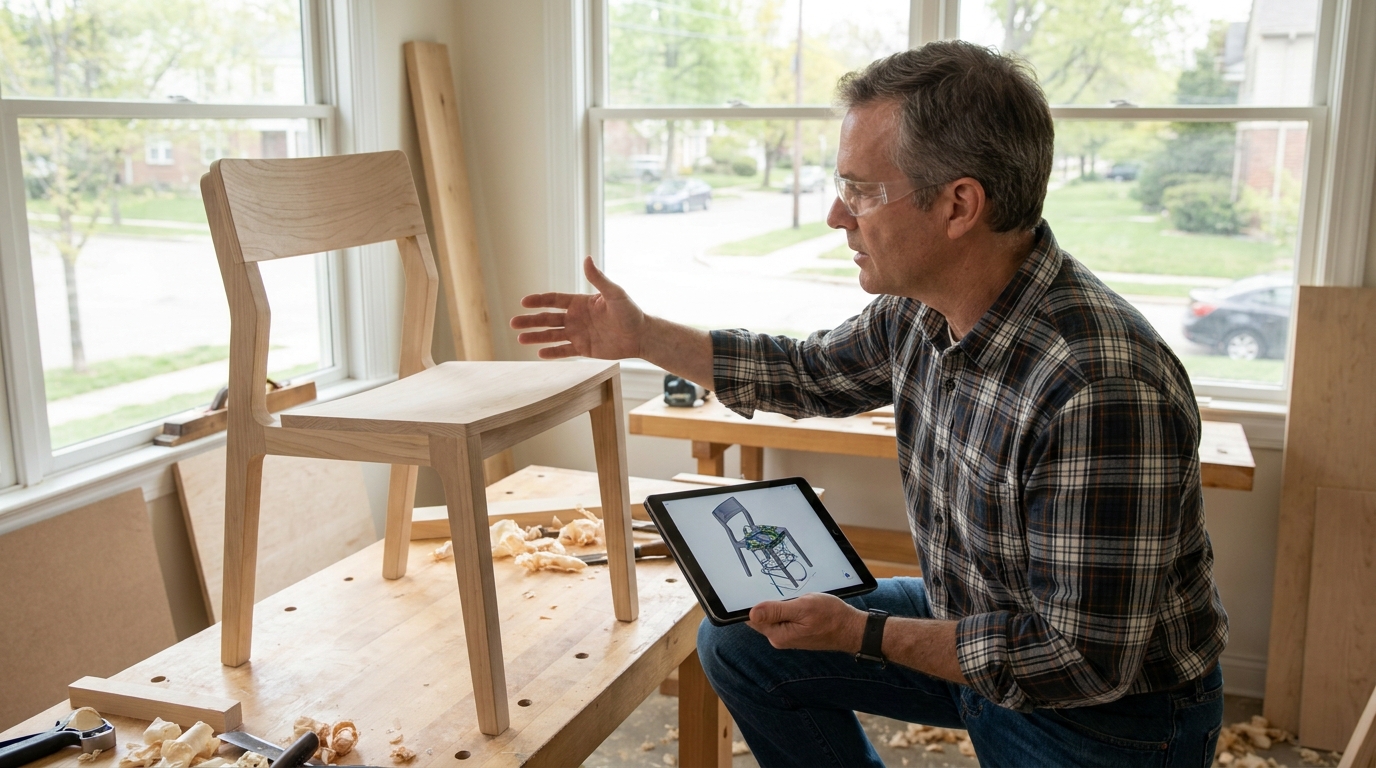
We just explored how smart material selection protects your budget and ensures durability. You have your premium woods and high-resiliency foams ready. Now, we must bring those raw inputs together. Furniture prototyping bridges the gap between digital concepts and physical reality. It stands as an essential milestone before moving into full production. Skipping this phase often leads to expensive mistakes on the factory floor. In this section, we will walk you through the step-by-step prototyping process. You will learn how to spot design flaws, test structural integrity, and approve the final sample.
The Step-by-Step Prototyping Process
Creating a physical prototype follows a strict, step-by-step workflow. It always begins with technical documentation. Engineers convert your initial sketches into precise 3D CAD models and shop drawings. These documents detail every joint, dimension, and material specification. Next, we move into material testing. We apply the finish strike-offs discussed earlier to verify the exact stain color. Finally, the factory builds the physical sample. Facilities often use CNC machining during this stage. This technology ensures complex geometries match your digital files perfectly.
Keep in mind that prototype units require specialized setup. They typically cost two to three times the projected mass-production price. This initial investment covers custom tooling and prevents massive losses later.
Identifying Flaws and Testing Integrity
A prototype does more than just look good on a showroom floor. It serves as a highly functional test subject. You must use it to identify hidden design flaws before mass manufacturing begins. Structural integrity is critical, especially for commercial environments. We test joints under heavy stress to ensure they hold up daily. We also verify the physical comfort of seating arrangements.
A 3D render cannot tell you if a chair actually feels right. You must sit on it to evaluate the seating angle and foam density. If the pitch is too steep, we adjust the internal frame. If the cushion feels too firm, we swap the foam core. Finding these issues now saves you from shipping hundreds of defective units later.
Approving the “Golden Sample”
Once you perfect the design, you must formally approve it. This approved unit becomes the “Golden Sample.” It sets the absolute standard for the entire production run. We always recommend creating two identical Golden Samples. You keep one for your own quality control comparisons. The manufacturer keeps the other on the factory floor as a direct reference.
Getting this sample to you quickly is vital for project timelines. We often use air freight for urgent prototypes. Air freight costs four to six times more than sea freight. However, it saves over 30 days of transit time.
Homefurnitureliving manages this entire prototyping phase through our digital operation model. Our team conducts the First Article Inspection (FAI) directly on the factory floor. We ensure the physical prototype matches your technical specs exactly. After you sign off on the Golden Sample, we can safely move to the manufacturing line. This final approval ensures every piece perfectly aligns with your brand standards. You are now ready to finalize your custom furniture manufacturing MOQ and launch full production.
| Evaluation Area | What to Inspect on the Prototype | Why It Matters Before Production |
|---|---|---|
| Structural Integrity | Joint stability, weight capacity, and frame flex. | Prevents catastrophic failures in commercial or high-traffic settings. |
| Ergonomics & Comfort | Foam density, seat depth, and backrest angle. | Ensures the piece is actually usable, not just visually appealing. |
| Aesthetics & Finish | Veneer matching, stain consistency, and fabric alignment. | Guarantees the final product matches your brand’s luxury standards. |
Navigating Custom Furniture Manufacturing MOQ (Minimum Order Quantity)
You just approved your Golden Sample. The design looks perfect. The structural integrity passes every test. Now, you face the next major manufacturing hurdle. You must navigate the custom furniture manufacturing MOQ. Minimum Order Quantity dictates how many units you must buy in a single production run. Factories do not set these numbers arbitrarily. They require minimums to justify massive setup costs on the production line. Setting up CNC machines takes time. Sourcing raw materials in small batches costs more. A factory loses money if they stop a massive line to build just three chairs. Understanding these requirements helps you plan your inventory better. We will break down what drives these minimums below. You will learn how to secure the right volume for your business without overextending your budget.
Key Factors Influencing Order Minimums
Several hidden factors push order minimums higher. You must understand them to control your production strategy. First, consider material rarity. Factories usually stock standard kiln-dried plywood. If you demand a rare exotic veneer or custom-dyed fabric, suppliers force a minimum on the furniture factory. They pass this requirement directly to you. Second, custom tooling costs play a massive role. Unique metal extrusions or complex molded plastics require expensive new molds. The factory must spread this upfront cost across hundreds of units. Finally, production line setups dictate efficiency. Workers need time to calibrate machinery for your specific dimensions. High-volume runs absorb these labor costs easily. Small runs make setup time financially impossible for standard mass-market facilities.
Leveraging the Industrial Cluster Advantage
Traditional overseas sourcing often locks you into massive volume commitments. Mass-market OEM factories usually demand 100 or more units. They might even require a full 20ft container per SKU. This creates huge inventory risks for boutique brands. We solve this problem through our innovative “Industrial Cluster + Digital Operation” model. Homefurnitureliving connects you directly to China’s premium furniture industry. We unite top-tier manufacturing lines across different specialties. This cluster approach offers unparalleled flexibility.
We match your specific volume needs to the right facility. A boutique workshop in our network easily handles a small 5-unit bespoke run. A mid-tier factory manages your 50-unit rollout efficiently. You get factory-direct cost-efficiency without committing to thousands of pieces. Our team handles capacity evaluations and strict on-site inspections for every order size. This ensures your smaller runs receive the exact same quality control as massive commercial orders.
Practical Tips for Negotiating Volumes
You can actively negotiate lower minimums if you understand factory operations. Ordering wholesale custom furniture does not always mean buying full shipping containers. You just need a smart approach. First, standardize your hidden components. Use identical internal frames across multiple seating collections. The factory can run frames in bulk while customizing the upholstery later. Second, specify stock materials whenever possible. Choose standard fabric colors or common wood stains. The factory avoids supplier minimums and passes flexibility to you. Third, consolidate your shipments. You can often mix different SKUs into one 40ft High Cube container. A 40ft High Cube holds approximately 76 cubic meters. This strategy satisfies overall factory volume requirements while keeping individual item counts low.
| Purchasing Strategy | Factory Impact | Direct Benefit to Your Business |
|---|---|---|
| Using Stock Materials | Eliminates raw material supplier minimums. | Allows smaller production runs and faster lead times. |
| Standardizing Internal Frames | Increases machine efficiency and lowers setup labor. | Reduces overall unit cost across different product lines. |
| Mixing SKUs in One Container | Meets the factory’s total revenue threshold. | Diversifies your inventory without ordering hundreds of one item. |
The OEM Furniture Production Process: From Concept to Delivery
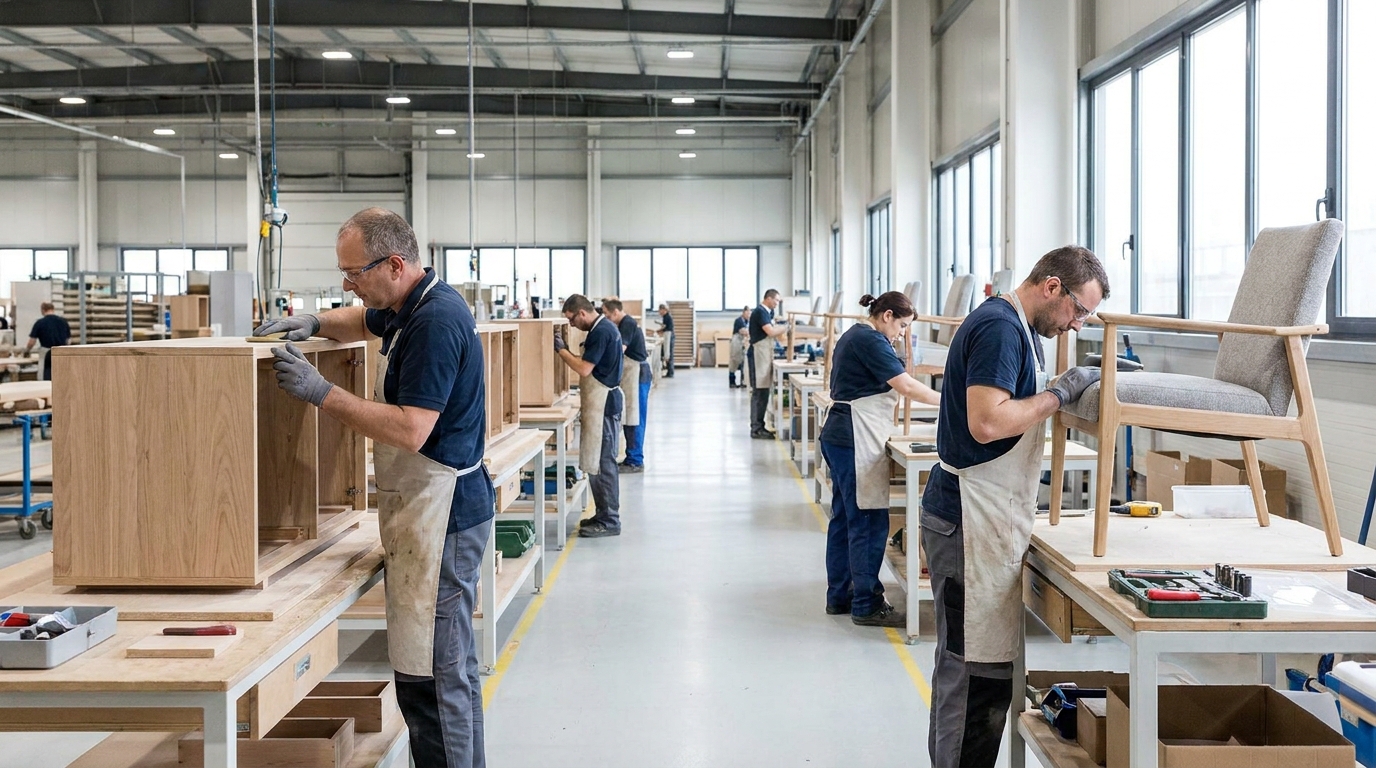
You just mastered navigating MOQs and consolidating your shipments. You secured the right volume through our industrial cluster model. Now, the actual manufacturing phase officially begins. Moving from an approved Golden Sample to a fully delivered order requires precise execution. The OEM furniture production process demands strict oversight at every single stage. We handle this end-to-end B2B sourcing experience seamlessly for you. Let us walk through exactly how your concept transforms into a finished, market-ready product.
Step 1: Initial Inquiry and Finalizing Specifications
Before cutting any wood, we finalize every technical detail. You submit your initial inquiry and design concepts. We then conduct a thorough design consultation together. Engineers review your shop drawings, Bill of Materials (BOM), and spec sheets. We ensure your cutting lists align perfectly with the approved prototype.
This critical step eliminates miscommunication early. It prevents your design intent from getting lost in translation overseas. We lock in all variables right now. You approve the exact hardware standards, such as soft-close hinges rated for 50,000 cycles. We also confirm your packaging requirements, whether shipping Flat-Packed or Fully Assembled.
Step 2: Factory Capacity Evaluations and On-Site Inspections
Not every factory can handle every design requirement. We leverage our “Industrial Cluster + Digital Operation” model to assign your project correctly. Our team conducts rigorous capacity evaluations before production starts. We verify machinery capabilities, ethical compliance, and worker expertise.
We perform strict on-site inspections to guarantee manufacturing excellence. If a facility lacks the right CNC machines for your complex geometries, we route the job to a specialized partner. This guarantees factory-direct cost-efficiency without ever compromising quality. You get peace of mind knowing the chosen facility perfectly matches your specific production needs.
Step 3: Mass Production, Assembly, and Finishing
Once we clear the facility, mass production kicks off. Workers mill the premium raw materials we selected earlier. They utilize CNC machining to ensure high repeatability across hundreds of units. Manual labor steps in for specific high-end, hand-planed aesthetics.
Next, the assembly phase begins on the factory floor. Teams join frames using strong mortise and tenon or dovetail joinery. Finally, they apply finishes and complete the upholstery. We ensure low-VOC finishes match your exact strike-off approvals perfectly. Pieces take shape rapidly, moving down the line efficiently.
Step 4: Comprehensive Quality Control for Zero Defects
Quality variance ruins retail brands. You cannot afford a “bait and switch” where mass production falls short of the prototype. We implement comprehensive quality control on the factory floor. Our teams perform in-line inspections during the milling and assembly stages.
We check standard manufacturing tolerances constantly. We keep dimensional deviations within a strict +/- 1mm to 2mm range. Final inspections evaluate the finished aesthetics and structural integrity. We also conduct rigorous drop-testing for packaging.
This testing ensures your custom pieces survive international transit and rough last-mile handling. Once everything passes inspection, our integrated logistics take over. We handle the cross-border customs clearance and freight forwarding. Your inventory ships out safely, arriving exactly as promised.
| Production Phase | Key Factory Actions | Direct Benefit to Your Business |
|---|---|---|
| Specification Review | Auditing BOM, tech packs, and shop drawings. | Prevents costly design misunderstandings before manufacturing begins. |
| Capacity Evaluation | Conducting strict on-site inspections and machinery checks. | Matches your exact project needs to the most capable facility. |
| Mass Manufacturing | Milling, CNC machining, assembly, and applying finishes. | Transforms your raw inputs into consistent, market-ready products. |
| Quality Control (QC) | In-line checks, tolerance verification, and packaging drop-tests. | Eliminates quality variance and prevents expensive shipping damage. |
Sourcing Wholesale Custom Furniture: Bridging the Global Market
We just walked through the OEM production process. You saw how rigorous quality control and careful logistics get your products shipped safely. Now, let us look at the bigger picture. Scaling your brand requires reliable partners. Sourcing wholesale custom furniture from overseas can feel intimidating. Language barriers and time zones often complicate simple orders. However, modern digital solutions eliminate these traditional hurdles. You can now access premium manufacturing with total confidence.
Strategic Advantages of China’s Premium Furniture Industry
China’s premium furniture industry offers unmatched strategic advantages. You gain access to massive manufacturing infrastructure. This ecosystem supports everything from bespoke craftsmanship to high-volume assembly lines. Traditional sourcing forced buyers to navigate this complex web alone. You had to find reliable factories, negotiate terms, and hope for the best. Today, the landscape is completely different.
By tapping into this industrial network, you secure factory-direct cost-efficiency. You also gain access to advanced CNC machinery and specialized material suppliers. This concentration of resources means faster lead times for your custom builds. Standard international production cycles range from 8 to 12 weeks. An integrated approach keeps these timelines strictly on track.
Digital Operations as the Ultimate Bridge
Finding the right factory is only half the battle. You must manage the relationship effectively. This is where modern digital operations change the game. Homefurnitureliving serves as your ultimate digital bridge. We connect global buyers directly with vetted overseas manufacturers. Our “Industrial Cluster + Digital Operation” model removes the guesswork from vendor selection.
We do not just display products on a screen. We guarantee manufacturing excellence through active management. Our team unites top-tier manufacturing lines to offer unparalleled flexibility. We conduct the strict on-site inspections discussed earlier. We also perform rigorous capacity evaluations before you place an order. This digital oversight ensures your design intent never gets lost in translation.
Securing an End-to-End B2B Sourcing Experience
Your brand reputation relies on consistent quality. A single bad production run can ruin customer trust. You must protect your investment at every stage. We provide a seamless, end-to-end B2B sourcing experience to secure your supply chain. We manage everything from your initial inquiry to final delivery.
This includes comprehensive quality control on the factory floor. It also covers integrated logistics and cross-border customs clearance. You never have to worry about managing multiple freight forwarders or customs brokers. We handle the complex paperwork and regulatory compliance for you. This comprehensive approach allows you to focus on growing your retail or commercial business.
| Sourcing Challenge | Traditional Overseas Sourcing | The Digital Bridge Model |
|---|---|---|
| Factory Selection | Blind searches and risky trial orders. | Pre-vetted facilities via rigorous capacity evaluations. |
| Control de calidad | Relying entirely on factory self-reporting. | Strict on-site inspections by independent teams. |
| Logistics & Customs | Managing multiple third-party brokers yourself. | Integrated cross-border customs clearance provided for you. |
Integrated Logistics and Cross-Border Customs Clearance
We just discussed how our digital bridge model secures your overseas supply chain. You no longer have to manage multiple freight brokers yourself. The production line has finished your order. Every piece passed strict quality control. As we wrap up this complete guide to custom furniture manufacturing: materials, prototypes, MOQ and production, we must move your high-value inventory across the globe. Integrated logistics and cross-border customs clearance form the final hurdle. In this section, you will learn how to pack, load, and ship your goods securely. We will show you how to avoid costly port delays and ensure a stress-free final delivery.
Secure Packaging and Optimized Container Loading
Moving bulky furniture requires smart engineering. You cannot just throw finished chairs into a box. We engineer packaging to survive international transit and rough last-mile handling. Shipping fully assembled pieces wastes valuable container space. Whenever possible, we design items as Knock-Down (KD) or Flat-Packed. This strategy maximizes your shipping volume.
Next, we optimize the actual container loading. A standard 20ft container holds roughly 28 to 30 cubic meters (CBM). A 40ft High Cube container holds about 76 CBM. Our factory teams calculate the exact box dimensions. They pack the container tightly to prevent shifting during ocean transit. This careful loading protects your investment from damage on the high seas.
Managing International Shipping for Bulky Items
Furniture is inherently large and heavy. Managing international shipping for these items requires specialized logistics. You cannot treat a sofa like a box of electronics. We rely primarily on sea freight for mass production runs. It offers the most economical route for heavy inventory.
Our integrated logistics network tracks your shipment from the factory floor to the destination port. We coordinate directly with ocean carriers. This ensures we secure container space even during peak shipping seasons. You avoid the stress of negotiating rates or dealing with sudden cargo rollovers.
Navigating Cross-Border Customs Clearance
Arriving at the port is only part of the journey. Your shipment must now pass through cross-border customs clearance. Customs authorities always require precise documentation. Missing paperwork triggers immediate, costly delays. They will hold your container and charge daily storage fees.
Different countries enforce strict regulations on wood products. They check for proper fumigation certificates and ethical sourcing documents. We prepare all required commercial invoices, packing lists, and compliance forms in advance. Our team files everything electronically before the ship even docks. This proactive approach clears your goods efficiently and prevents expensive port holds.
The Homefurnitureliving Advantage
Coordinating trucks, ships, and customs agents drains your resources. You should focus on selling your products, not tracking shipping containers. Partnering with a comprehensive platform like Homefurnitureliving changes everything. We provide a truly seamless, end-to-end B2B sourcing experience.
Our digital operation model extends far beyond the factory floor. We manage the entire journey from your initial inquiry to final delivery. Our team handles the freight forwarding. We also manage the complex customs brokerage. We even arrange the final truck transport directly to your warehouse. You receive your custom furniture exactly as promised, completely stress-free.
| Logistics Phase | Common Shipping Challenge | Our Integrated Solution |
|---|---|---|
| Container Loading | Wasted internal space and shifting cargo. | Flat-packing designs and precise CBM calculation. |
| Ocean Freight | Securing cargo space during peak seasons. | Direct carrier coordination via our digital platform. |
| Customs Clearance | Missing paperwork causing expensive port holds. | Advance electronic filing of all compliance documents. |
Conclusión
Mastering materials, prototypes, MOQ, and production ensures custom furniture success.
Homefurnitureliving is your reliable digital bridge for flexible, factory-direct sourcing.
Enjoy seamless B2B sourcing from initial inquiry to final delivery.
- Outline your design and material needs clearly.
- Contact our team to discuss your project.
- Order a prototype to verify product quality.
Frequently Asked Questions About Custom Furniture Manufacturing
How can small brands order custom furniture without huge minimums?
Many boutique workshops accept smaller orders of 1 to 5 units. Mid-tier factories usually need 20 to 50 items. Homefurnitureliving connects you with top-tier manufacturing lines in China. Our unique cluster model offers great flexibility for different order sizes. We help you find the right factory match. This means you get factory-direct savings without needing to order hundreds of pieces.
Why does custom furniture cost more than retail store items?
Custom pieces require special shop drawings and unique molds. Making a single prototype costs twice as much as mass production. Factories also use higher quality materials like solid wood or high-resiliency foam. Standard retail items are made in massive batches to lower costs. However, Homefurnitureliving provides excellent factory-direct cost-efficiency. We link you directly to inspected Chinese manufacturers to keep your expenses manageable.
How do I ensure the final production matches my prototype?
You should always keep a golden sample for quality control. One stays at the factory, and you keep the other. This gives everyone a clear standard to follow carefully. Homefurnitureliving guarantees excellence through strict on-site inspections. We evaluate every partner facility carefully before production starts. Our team handles comprehensive quality control during the manufacturing process. This ensures your final furniture matches the approved prototype perfectly.
What happens if my custom furniture gets damaged during shipping?
Proper packaging is crucial to survive international transit and handling. Factories should use drop-testing to engineer safe and secure boxes. If damage occurs, replacements can seriously delay your entire project. Homefurnitureliving prevents these issues with highly integrated logistics services. We manage everything from cross-border customs clearance to final delivery. Our end-to-end B2B sourcing experience ensures your items arrive safely.
Can I use my own special fabrics for custom seating?
Yes, many manufacturers accept Customer’s Own Material for upholstery projects. You just need to ship your fabric to the factory. Commercial projects often require contract-grade fabrics that last much longer. Homefurnitureliving makes this custom process easy for all global buyers. We coordinate the delivery of your custom materials to our partner facilities. This ensures your exact design vision becomes a beautiful reality.
Creating custom furniture requires careful planning and the right partners. You must balance design ideas with material choices and production limits. Understanding minimum orders and quality control keeps your project on track. Homefurnitureliving makes this entire sourcing process simple and very efficient. We connect you directly with China’s premium manufacturing network. You get top quality, great prices, and smooth logistics every time.
- Gather your design concepts and technical specifications into a clear file.
- Request a quote from Homefurnitureliving to compare factory-direct pricing options.
- Order a physical finish sample to verify material quality in person.
- Plan your project timeline by factoring in prototyping and shipping weeks.