

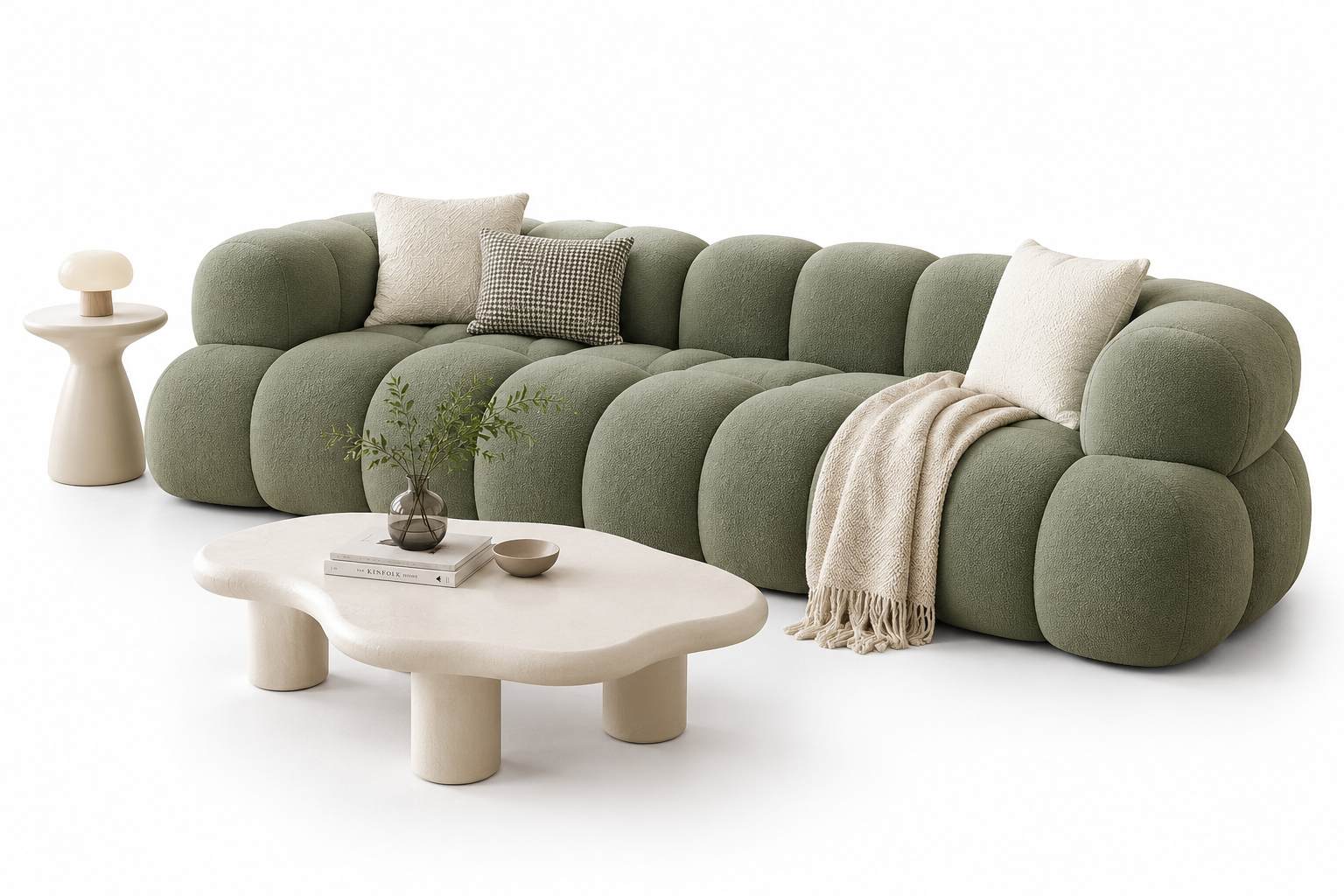
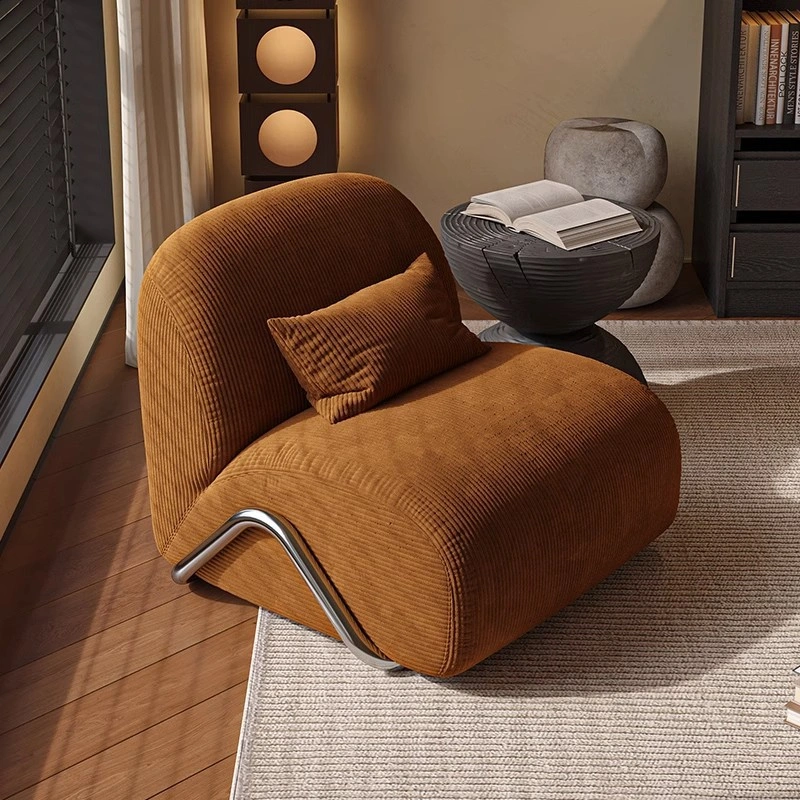
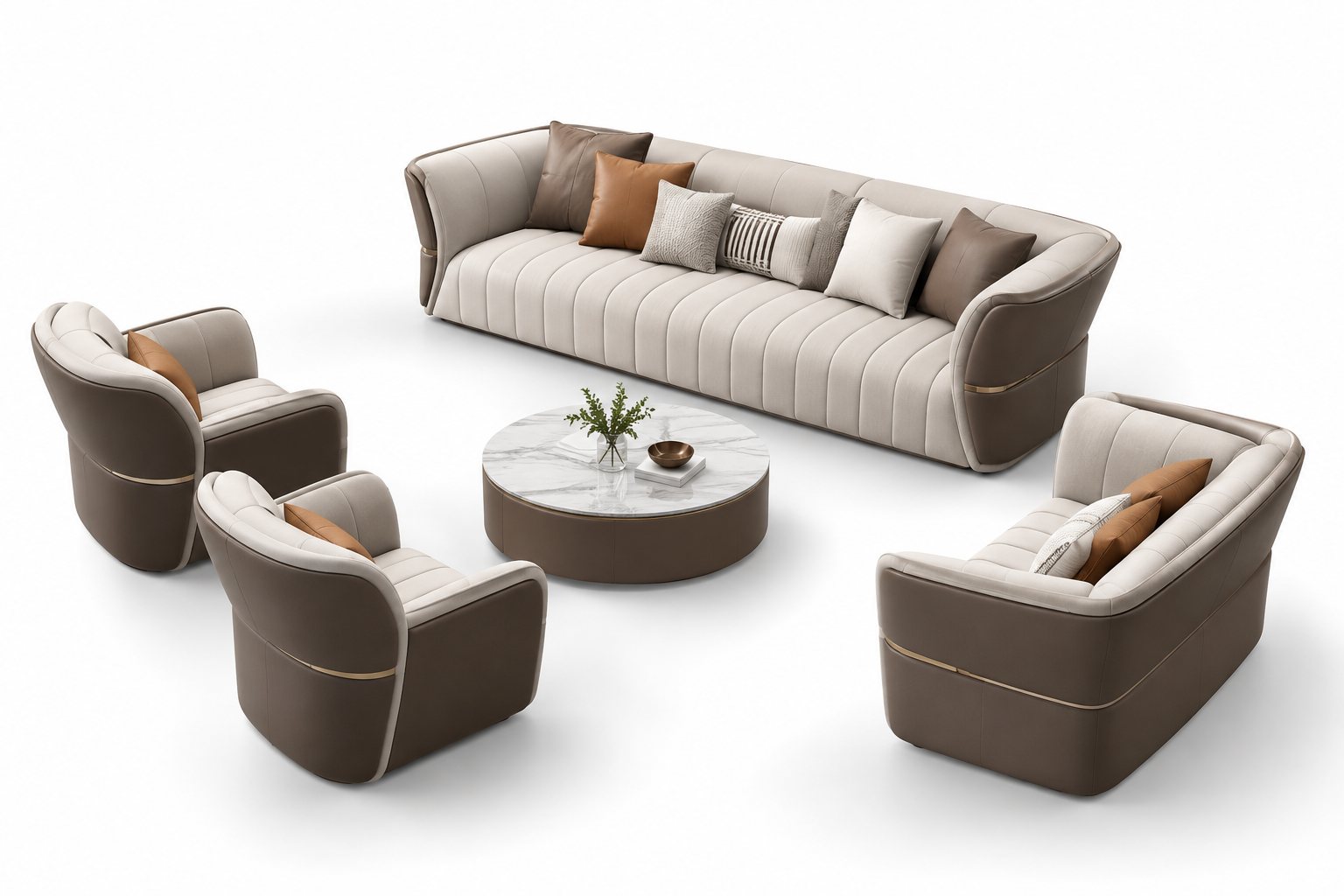
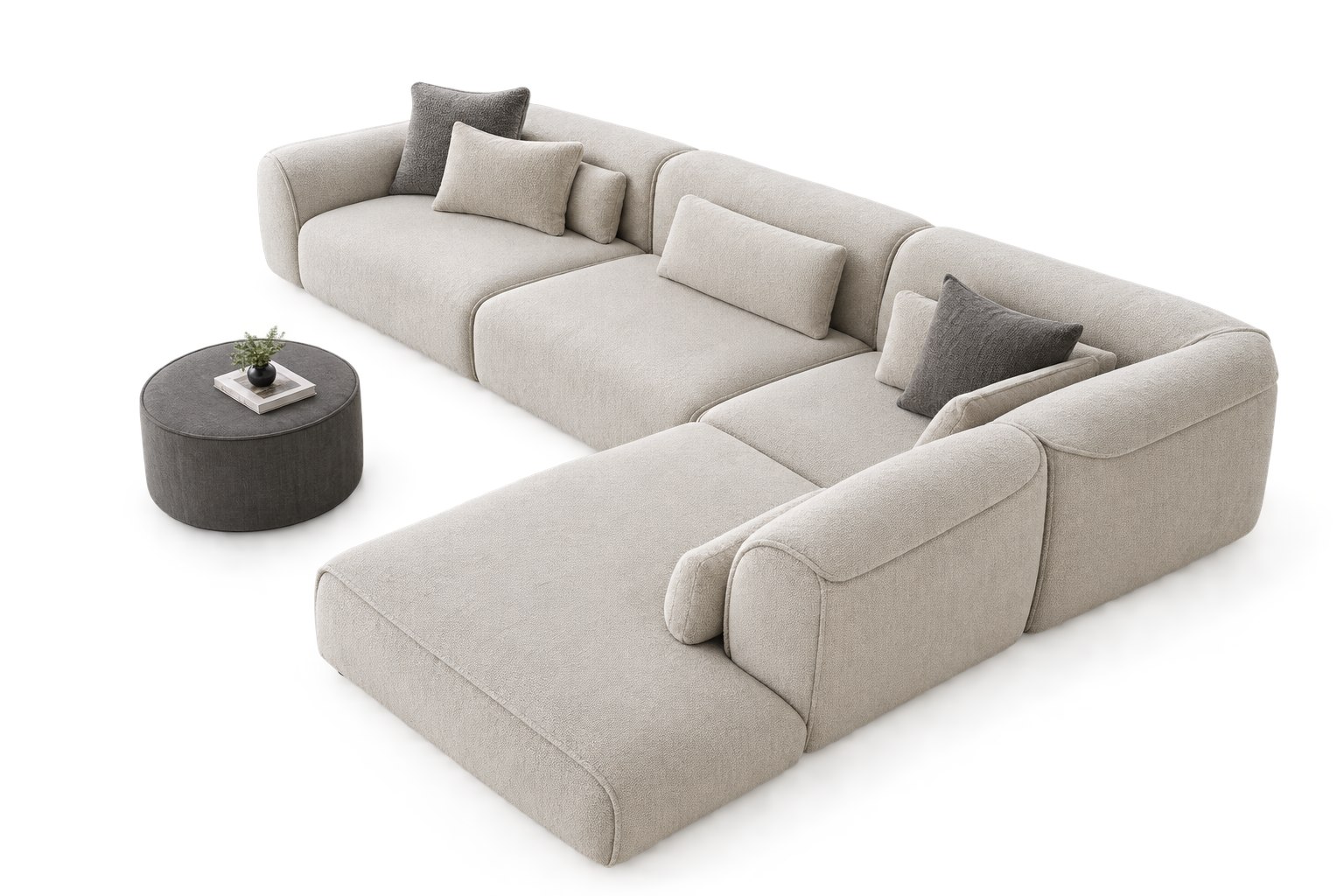
Demand for unique furniture is rapidly growing today. How do retailers scale without owning a factory?
OEM manufacturing solves this complex B2B sourcing problem. It turns your designs into a profitable reality.
In this post, you will learn how it works. We explore the process from design to delivery.
Understanding the Basics: What is Furniture OEM?

You want to scale your retail brand and need reliable production. This is where OEM steps in. OEM stands for Original Equipment Manufacturer. In our industry, it simply means contract manufacturing. You hand over your technical documents. These include 3D CAD drawings and a Bill of Materials. The factory then brings your exact vision to life. It follows a simple rule: “I give you the design, you build it.”
OEM vs. ODM: Knowing the Difference
People often confuse OEM with ODM. ODM stands for Original Design Manufacturer. They serve very different business needs. ODM means you pick an existing factory design. You just add your brand logo to it. It works well for quick product launches. However, OEM gives you complete ownership. You control every single detail.
| Feature | OEM (Original Equipment Manufacturer) | ODM (Original Design Manufacturer) |
|---|---|---|
| Design Ownership | You own the intellectual property (IP). | The factory owns the core design. |
| Time to Market | Slower. It requires prototyping and testing. | Faster. Products are already developed. |
| Individualisierung | Limitless. You dictate materials and dimensions. | Low. You are restricted to minor cosmetic changes. |
Strategic Benefits of the OEM Route
Why choose the furniture OEM manufacturing process? The benefits go far beyond just making products.
- Factory-Direct Cost Efficiency: You skip middlemen entirely. You pay only for materials, labor, and factory overhead. This keeps your profit margins healthy.
- Massive Scalability: You do not need to buy heavy machinery. You simply tap into existing infrastructure. Homefurnitureliving connects you directly to premium manufacturing lines. We use an “Industrial Cluster + Digital Operation” model. This unites top-tier facilities to give you unmatched flexibility.
- Total Brand Control: No one else can sell your proprietary designs. You dictate the exact wood moisture content. You choose the specific fabric rub counts.
Finding the right partner makes all the difference. When sourcing from a furniture factory China, strict on-site inspections matter. We evaluate capacity and run comprehensive quality control. Our seamless end-to-end B2B sourcing ensures your final production batch matches your golden sample perfectly.
Phase 1: Collaborating with a Custom Furniture Design Factory

You already know finding the right partner ensures your final batch matches your golden sample perfectly. But how do you create that perfect first unit? It all begins here. You must translate your brand vision into a language the factory understands.
Translating Vision into Manufacturing Blueprints
Arbeiten mit einem custom furniture design factory requires extreme precision. You cannot just hand over a rough sketch. Manufacturers need actionable blueprints to start the process. You must provide a comprehensive Tech Pack and a Bill of Materials (BOM). These technical documents remove all guesswork. They tell the factory exactly what materials and dimensions to use.
The Power of CAD and 3D Modeling
Next comes digital visualization. Factory engineers use CAD (Computer-Aided Design) software. They transform your conceptual sketches into detailed 2D and 3D models. This step remains crucial before moving toward mass production furniture. CAD drawings reveal potential structural flaws early. They show exactly how different joints connect. You can view the product from every angle before cutting any physical material.
Collaborating with Factory Engineers
You rarely do this alone. You will collaborate closely with experienced factory engineers. They evaluate your design for structural integrity and aesthetic accuracy. Sometimes a beautiful concept lacks physical stability. Engineers suggest smart modifications to improve material feasibility.
For example, they might recommend using veneer instead of solid wood for large panels. This prevents natural expansion and warping. Homefurnitureliving bridges this exact gap. We connect you directly to top-tier manufacturing lines. Our partner facilities provide expert engineering support to refine your designs.
Establishing Clear Specifications
The final step of this phase involves locking in exact specifications. You must define dimensions, weight capacities, and hardware requirements clearly. Never skimp on “invisible” hardware like hinges or drawer slides. These are the most common points of product failure.
| Specification Type | What to Define | Industry Standard |
|---|---|---|
| Dimensions & Tolerances | Exact height, width, and depth limits. | ±1mm to ±3mm depending on the material. |
| Hardware Requirements | Brand and grade of hinges, slides, and screws. | Specify commercial-grade components for heavy daily use. |
| Material Stability | Wood moisture limits to prevent cracking. | Strictly maintained between 6% and 12%. |
Phase 2: Prototyping and Material Sourcing
You locked in your exact dimensions and selected commercial-grade hardware. The blueprints look perfect on a screen. Now, it is time to bring those digital files into the physical world. Prototyping and material sourcing form the crucial second phase of the OEM journey.
The Non-Negotiable “First Article”
You cannot skip creating a physical prototype. Manufacturers call this the “First Article.” It tests structural integrity and aesthetic accuracy before you commit to large volumes. Factories typically charge two to three times the mass unit price for samples. Sample lead times average 7 to 21 days.
This upfront investment prevents costly mistakes during wholesale furniture production. It establishes your “Golden Sample.” Always request two identical approved units. Keep one at your office for quality control comparisons. The factory keeps the other on the production line as a daily reference.
Selecting Materials for Durability and Cost
Choosing the right materials balances longevity and budget. You must specify exact grades and performance metrics. For wood furniture, factories must maintain moisture content strictly between 6% and 12%. This prevents warping or cracking when shipping products to different climates.
Smart engineering saves money without sacrificing quality. Use veneer over MDF or plywood for large flat surfaces. It resists the natural expansion issues inherent in solid wood panels. For upholstery, check fabric rub counts using the Martindale scale. Ensure foam materials meet CAL 117 fire retardancy standards.
Homefurnitureliving helps you navigate these material choices. We leverage an “Industrial Cluster + Digital Operation” model to source premium components directly. We unite top-tier manufacturing lines to offer unparalleled flexibility and factory-direct cost-efficiency.
Evaluating the Prototype rigorously
Once the prototype arrives, you must evaluate it beyond just looks. Sit on it. Test the drawer slides repeatedly. Check the ergonomics and overall stability. Does it feel comfortable? Does it wobble? You also need to verify industry compliance standards.
| Material Category | Common Certification Standard | What It Ensures |
|---|---|---|
| Solid Wood & Plywood | FSC (Forest Stewardship Council) | Responsible and sustainable timber sourcing. |
| Engineered Wood (MDF) | CARB Phase 2 | Strict limits on formaldehyde emissions. |
| Office Seating & Desks | BIFMA | Commercial-grade performance, safety, and durability. |
| Upholstery Foam | CAL 117 | Specific fire retardancy and flammability resistance. |
Our partner facilities undergo strict on-site inspections and rigorous capacity evaluations. We ensure the physical sample matches your exact safety and structural requirements before moving forward.
Adjustments and Final Approval
You will rarely approve the very first version. Prototyping is a highly iterative process. You might notice a joint needs extra reinforcement. Perhaps a fabric color looks slightly off under natural light. Document every required change clearly.
Update the Bill of Materials (BOM) to reflect these tweaks. The factory will produce a revised sample if necessary. Do not authorize the production line until the prototype is flawless. Your final approval locks in the design for mass manufacturing.
Phase 3: Transitioning to Mass Production Furniture
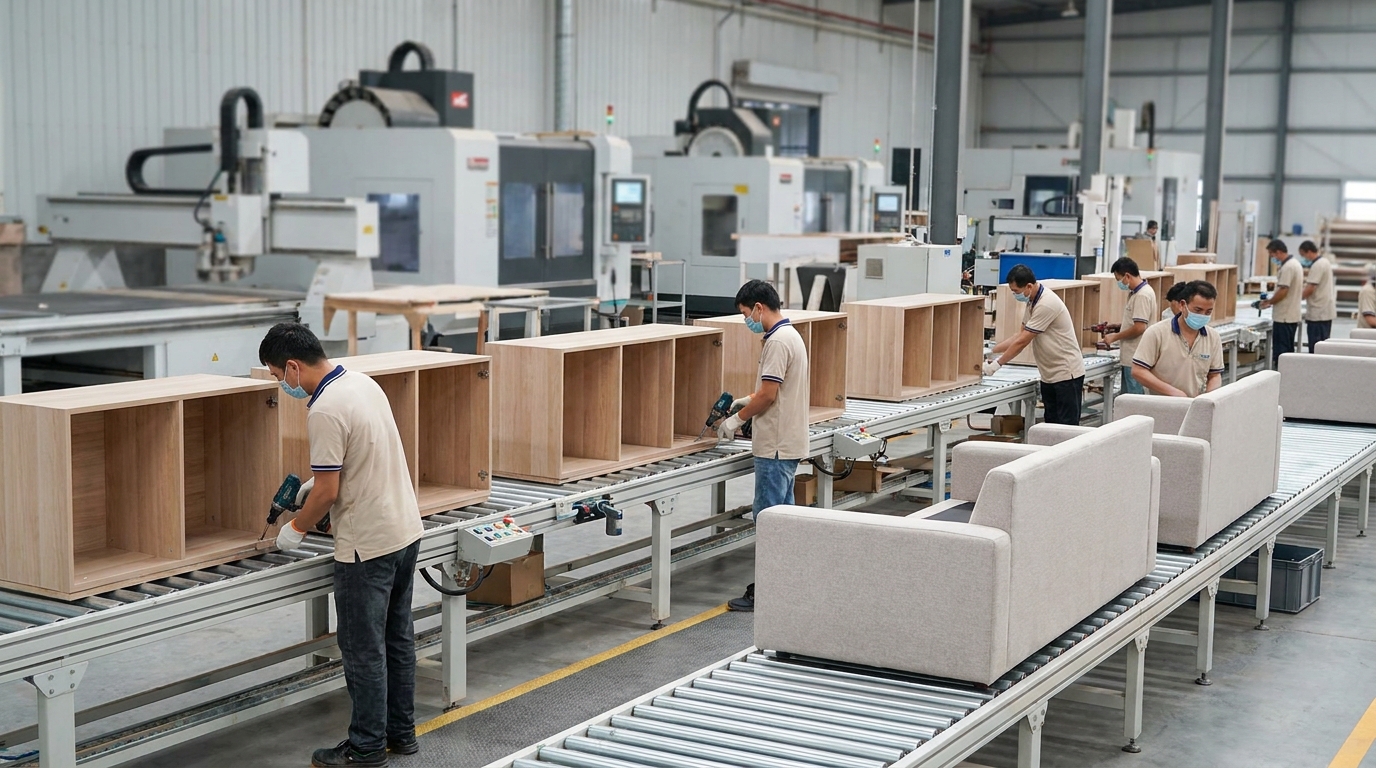
You locked in your design. The golden sample sits perfectly in your office. Now, the factory shifts gears. We move from a single approved prototype to full-scale manufacturing. Understanding how furniture OEM manufacturing works from design to mass production requires seeing the factory floor in action. This transition demands careful planning and exact execution.
Setting Up Manufacturing Lines and Tooling
Factories do not just press a button to start. They must prepare specialized tooling for scale. Engineers program CNC machines using your approved CAD files. They create custom molds for any unique plastic or metal components.
This setup phase dictates minimum order quantities (MOQs). Standard factory MOQs typically range from 50 to 200 units per SKU for large items like sofas or beds. Smaller items like side tables or chairs often require 300 to 500 units. Homefurnitureliving unites top-tier manufacturing lines to handle these setups efficiently. We ensure your production run starts without unnecessary delays.
Optimizing Workflows for Speed and Flexibility
Scaling up requires extreme organization. Facilities optimize their workflows to ensure unparalleled flexibility and speed. They organize the factory floor to minimize bottlenecks between different workstations.
Our “Industrial Cluster + Digital Operation” model plays a massive role here. It connects specialized facilities together. If one line faces a raw material shortage, production can shift smoothly. This digital approach keeps your inventory flowing even when unexpected challenges arise.
The Step-by-Step Assembly Line Process
The actual manufacturing happens in distinct, highly controlled stages. Every station focuses on a single task. This maintains consistency across the entire batch.
| Production Stage | Key Activities | Quality Focus |
|---|---|---|
| 1. Raw Material Processing | Kiln-drying wood, cutting panels, and CNC machining. | Maintaining wood moisture content between 6% and 12%. |
| 2. Component Fabrication | Edge banding panels and powder coating metal frames. | Ensuring exact dimensional tolerances (±1mm to ±3mm). |
| 3. Sub-Assembly | Joining frames and installing commercial-grade hardware. | Testing structural stability and joint strength. |
| 4. Finishing & Upholstery | Sanding, staining, painting, and applying fabrics. | Matching the golden sample for color and texture. |
Managing Timelines and Raw Material Inventory
Large-scale orders demand strict schedule management. Factories must secure all timber, foam, and fabric before starting the line. Missing a single hinge can halt the entire operation.
You should expect average production lead times of 30 to 60 days post-sample approval. However, timing matters greatly. Peak seasons like Q4 or the pre-Lunar New Year rush can easily extend lead times to 90 days or more. You must plan your inventory orders well in advance.
We conduct rigorous capacity evaluations on all partner facilities. This ensures they can actually handle your volume within the promised timeframe. Proper planning keeps your supply chain predictable and your retail shelves stocked.
Phase 4: Quality Control in Wholesale Furniture Production
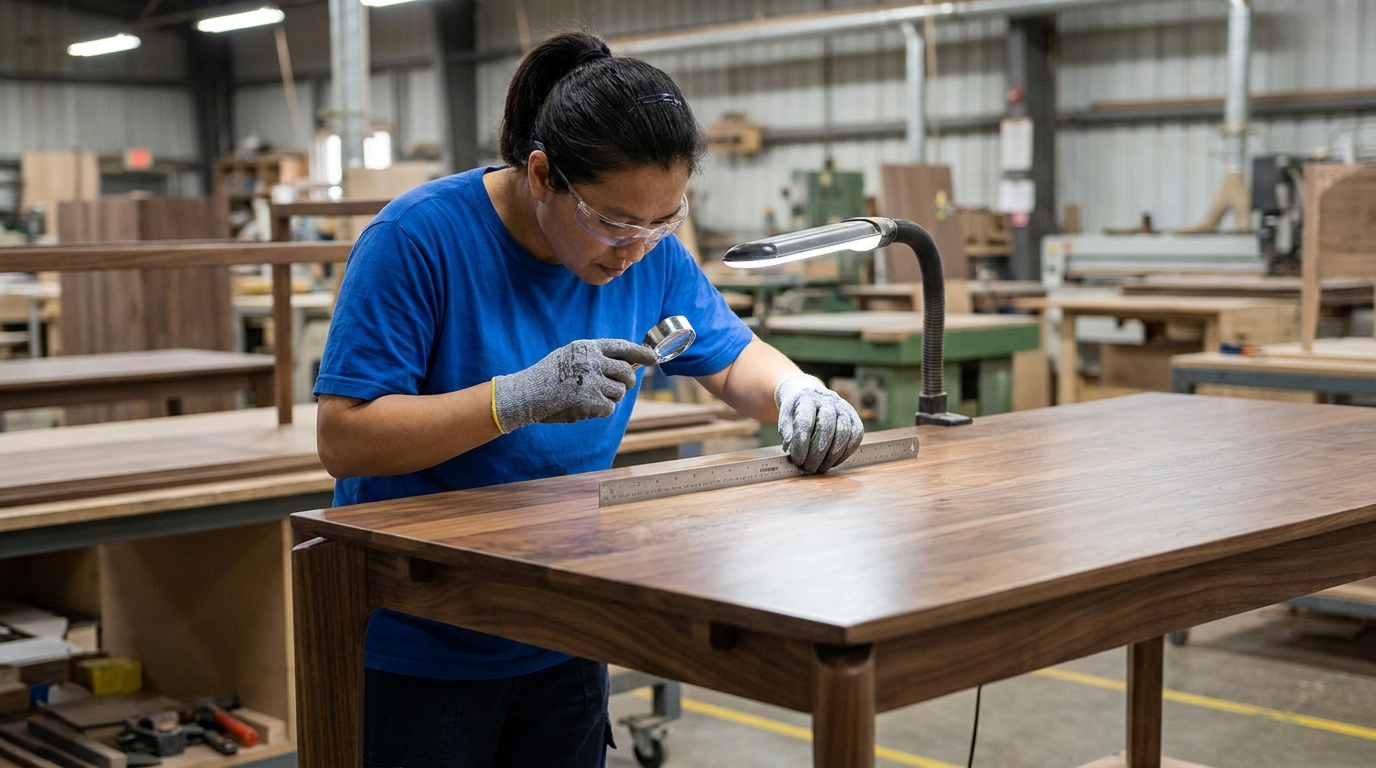
You planned your inventory orders carefully. The assembly line is running smoothly. But hitting your delivery timeline means nothing if the products arrive defective. As we covered earlier, mass manufacturing involves multiple complex stages. Quality control ensures every single unit matches your approved golden sample perfectly.
Implementing Strict On-Site Inspections
You cannot wait until the products are in boxes to check them. QC must happen throughout the entire manufacturing cycle. In-process inspections help you catch errors early. If a CNC machine cuts a panel slightly off, you want to know immediately. Homefurnitureliving takes this responsibility very seriously. We conduct strict on-site inspections at every partner facility. We monitor the raw material processing, sub-assembly, and final finishing stages. This proactive approach stops minor issues from becoming expensive disasters.
Conducting Rigorous Capacity Evaluations
Scaling up often stresses a factory’s resources. When facilities rush to meet large bulk order demands, quality usually drops. Overworked staff might skip crucial assembly steps. We prevent this by conducting rigorous capacity evaluations before production even begins. We verify they have enough trained staff and proper machinery. We ensure they can consistently handle your volume without compromising quality. This guarantees your production runs smoothly from the first unit to the last.
Standardized Testing Procedures
Visual checks alone are never enough. You need standardized testing procedures to verify product durability. Inspectors use specific tools to measure exact tolerances. They check finish consistency under standardized lighting to ensure colors match perfectly. They also test joint stability by applying physical stress.
| Test Category | Testing Method | Quality Standard |
|---|---|---|
| Moisture Content | Using digital moisture meters on wood panels. | Strictly maintained between 6% and 12%. |
| Joint Stability | Applying physical weight and stress to frames. | Zero structural failure under commercial use. |
| Finish Consistency | Comparing production units to the golden sample. | Exact match in color, texture, and gloss level. |
| Transit Safety | Conducting ISTA 3A drop tests on boxed items. | No product damage using EPE foam packaging. |
Reducing Return Rates Through Guaranteed Excellence
Defective items destroy retail profit margins. Your retail customers always demand high-quality products. If a hinge fails or a panel cracks, they will return it. These avoidable returns easily damage your brand reputation. Acceptable Quality Level (AQL) standards usually set a strict limit of 0% for critical defects. We guarantee excellence at the factory level. Our comprehensive quality control acts as a digital bridge to the global market. By catching defects before they ship, we dramatically reduce return rates. You receive a seamless, end-to-end B2B sourcing experience.
Phase 5: Packaging, Logistics, and Cross-Border Customs Clearance
You caught every defect at the factory level. Your return rates will stay low. But hitting strict AQL standards means nothing if products break during transit. The final phase of how furniture OEM manufacturing works brings your goods across the ocean safely. You must protect your investment from the factory floor directly to your warehouse.
Designing Secure and Efficient Packaging
Furniture takes up massive shipping space. Shipping empty air costs you real money. You must engineer your packaging to minimize CBM (Cubic Meters). Smart engineering prevents transit damage while optimizing freight costs.
You generally choose between KD (Knock-Down) flat-packing or fully assembled shipping. Knock-down furniture reduces shipping costs significantly. It maximizes your available container space effectively. A standard 40ft High Cube (HC) container holds roughly 68 to 76 CBM of goods. Flat-packing lets you fit hundreds of more units inside.
However, you cannot sacrifice physical protection. Use honeycomb cardboard or EPE foam instead of standard EPS (Styrofoam). These modern materials offer better impact resistance. They meet strict eco-compliance standards globally. They also help your boxes pass rigorous ISTA 3A drop tests easily.
Managing Integrated Logistics for Bulky Items
Moving heavy furniture globally requires highly specialized logistics. You cannot treat heavy sofas like small consumer electronics. You must choose the right shipping terms carefully. FOB (Free On Board) and DDP (Delivered Duty Paid) remain the most common choices for international buyers.
Homefurnitureliving eliminates this logistical headache entirely. We provide integrated logistics tailored specifically for bulky furniture. Our team coordinates the freight movement seamlessly. We ensure your containers leave the port on schedule. You never have to guess where your inventory is.
Navigating Cross-Border Customs Clearance
International trade involves complex paperwork. Customs officials will inspect your shipments closely. Missing a single compliance document can freeze your container at the port for weeks. You must prove your products meet regional safety and environmental standards.
| Document Type | Core Purpose | Customs Impact |
|---|---|---|
| Commercial Invoice | Declares exact value and HTS tariff codes. | Determines your specific import duty fees. |
| FSC Documentation | Proves responsible and sustainable timber sourcing. | Clears strict environmental border checks quickly. |
| CARB Phase 2 Certificate | Verifies extremely low formaldehyde emission limits. | Mandatory for clearing US engineered wood imports. |
Our experts handle these complexities directly. We manage the entire cross-border customs clearance process. We ensure all compliance documentation matches your physical cargo perfectly. This prevents unexpected border delays and hidden port storage fees.
Ensuring a Seamless End-to-End Experience
Sourcing overseas often feels highly fragmented. Buyers usually juggle a designer, a factory, a QC team, and a freight forwarder. This creates dangerous communication gaps. Mistakes happen when too many separate parties handle your goods.
We serve as your ultimate digital bridge to the global market. You get a truly seamless, end-to-end B2B sourcing experience. We manage everything from the initial CAD design to final warehouse delivery. You skip the stress of coordinating multiple third parties. You simply receive your retail-ready inventory exactly as you envisioned it.
Why Source from a Premium Furniture Factory China?
You just learned how integrated logistics prevent fragmented communication. A seamless end-to-end experience sounds ideal. However, achieving it requires choosing the right geographical base. China remains the global powerhouse for manufacturing. It offers deep supply chains and massive production scale. You just need the right local partner to navigate it.
Your Digital Bridge to Global Markets
Finding a reliable partner overseas often feels overwhelming. Language barriers and time zones complicate daily operations. Homefurnitureliving solves this exact problem. We serve as the ultimate digital bridge. We connect the global market directly to China’s premium furniture industry. You gain immediate access to world-class facilities without leaving your office.
The “Industrial Cluster + Digital Operation” Advantage
Standard sourcing agencies usually rely on a single factory. If their machines break, your timeline suffers. We take a completely different approach. We utilize an innovative “Industrial Cluster + Digital Operation” model. This system unites top-tier manufacturing lines across different specialized regions.
Imagine needing a sofa blending solid wood and complex metal hardware. One region excels at kiln-drying timber. Another specializes in CNC metal machining. Our digital operation links these specialized clusters seamlessly. You receive unparalleled flexibility. Production shifts easily if raw material shortages occur in one specific area.
Unmatched Factory-Direct Cost-Efficiency
Profit margins drive your retail business. Every middleman takes a cut of your revenue. Partnering directly with a vetted facility changes the equation. It provides unmatched factory-direct cost-efficiency. You pay for raw materials, skilled labor, and actual production.
We negotiate these costs transparently. You leverage our established relationships to secure better pricing. This keeps your wholesale purchasing highly competitive.
| Sourcing Approach | Production Flexibility | Cost Structure |
|---|---|---|
| Traditional Middlemen | Low. Tied to a single factory’s capacity. | High. Includes hidden markup fees. |
| Direct Unvetted Factory | Medium. High risk of quality drops during peak season. | Variable. Unexpected charges for molds or rework. |
| Our Digital Cluster Model | Maximum. Unites multiple top-tier manufacturing lines. | Optimized. True factory-direct cost-efficiency. |
On-the-Ground Support Guarantees Excellence
Many online platforms just display products. They leave you to handle the actual production risks alone. We operate differently. We guarantee excellence through comprehensive on-the-ground support. Our local teams monitor your order from the initial inquiry to final delivery.
- Vetted Partners: We conduct strict on-site inspections before onboarding any facility.
- Capacity Checks: We run rigorous capacity evaluations to ensure they handle your volume easily.
- Constant Oversight: Our inspectors walk the factory floors daily to verify your golden sample standards.
You never have to guess about your inventory status. We manage the entire OEM journey locally. You simply receive high-quality products ready for your retail customers.
Schlussfolgerung
Furniture OEM manufacturing turns your unique design into mass production.
You need a partner offering strict quality control.
Rigorous capacity evaluations and integrated logistics ensure success.
Our digital operations and industrial clusters scale your brand.
- Finalize your custom furniture design blueprints today.
- Request capacity evaluations from our premium factories.
- Start your seamless B2B sourcing journey now.
Frequently Asked Questions About Furniture OEM Manufacturing
What is the difference between OEM and ODM furniture?
OEM means you provide the exact design for the factory to build. You control all the creative details. ODM means you choose an existing factory design. You simply put your own brand logo on it. OEM offers complete customization for your unique ideas. ODM provides a faster route to market with less design work. Both options serve different business needs.
What are the typical minimum order quantities for custom furniture?
Minimum order quantities usually depend on the product size. Large items like sofas or beds require 50 to 200 units. Smaller items like chairs often need 300 to 500 units. Some factories might accept smaller orders for an extra fee. Homefurnitureliving connects you with top-tier manufacturing lines. This cluster model offers unparalleled flexibility for your sourcing needs. You get factory-direct cost efficiency on every order.
How do you ensure quality consistency during mass production?
Keeping a “Golden Sample” is the best way to ensure quality. The factory keeps one approved sample on the production line. The buyer keeps an identical sample for final comparison. Homefurnitureliving guarantees excellence through strict on-site inspections. We conduct rigorous capacity evaluations at all partner facilities. Our team manages comprehensive quality control from start to finish. You receive exactly what you approved.
Can I reduce shipping costs for large furniture orders?
Yes, choosing Knock-Down (KD) furniture designs can help immensely. KD furniture ships in flat boxes instead of fully assembled. This method can reduce your shipping costs by up to 50%. It maximizes the space inside a standard shipping container. However, it does increase the risk of consumer assembly errors. Homefurnitureliving also provides integrated logistics and cross-border customs clearance. We ensure a seamless delivery experience for your B2B sourcing.
How long does the manufacturing process take?
Creating the initial product sample usually takes 7 to 21 days. After you approve the sample, mass production begins. Average production lead times range from 30 to 60 days. Peak seasons like the fourth quarter can extend this timeline. Orders before the Lunar New Year might take over 90 days. Planning your inventory needs early prevents frustrating stock shortages.
Next Steps for Your Furniture Production
- List your exact product specifications in a detailed tech pack.
- Request two identical golden samples before starting mass production.
- Contact Homefurnitureliving to evaluate top-tier manufacturing lines for your project.
- Plan your production schedule around major holidays to avoid delays.
Furniture OEM manufacturing transforms your unique concepts into profitable realities. Success requires careful material selection and strict quality control protocols. Partnering with Homefurnitureliving simplifies this complex global supply chain. We provide a seamless bridge to China’s premium factory clusters. You will enjoy factory-direct savings and reliable end-to-end logistics. Start building your custom furniture line with confidence today.